Designing a Trusted P2P Transfer Experience
Enabling player-to-player liquidity inside a crypto poker ecosystem
- Company
- CoinPoker
- Product
- P2P transfers
- Role
- End-to-end design
- Platforms
- Mobile
- Team
- Product Manager · Engineering
Players funded each other through external crypto transfers, leaving the platform and delaying play.
The end-to-end native P2P transfer experience: finding a recipient, confirming, and tracking every transfer afterward.
The Opportunity
Overview
Players regularly support each other financially through staking, bankroll sharing, and tournament funding. However, these interactions relied on external crypto transfers, creating friction and disrupting gameplay.
To solve this, I designed a native P2P transfer system that enabled players to move USDT-based chips directly between accounts without leaving the platform.
Research
Players didn’t want transfers. They wanted participation.
Understanding the Existing Experience
When players wanted to fund another player, they had to leave the platform and rely on external crypto transfers. Players were already transferring value between each other—but the platform wasn't part of that journey.
- Player A
- Withdraw USDT
- External Wallet
- Send Crypto
- Player B Deposits
- Play
This created friction, delayed gameplay, and pushed liquidity outside the ecosystem. As a result, one of the most common financial interactions between players existed entirely outside the product.
Understanding User Psychology
Because chips represented real USDT value:
1 Chip = 1 USDTPlayers approached transfers with the mindset of financial transactions rather than gaming interactions.
Before sending money, users needed confidence that:
- they selected the correct recipient
- the transfer amount was accurate
- the transaction could be tracked afterward
- they understood the impact on their balance
Key Insight
During exploration, I realized players weren't looking for a better way to transfer money. They were looking for a better way to:
- fund tournament entries
- stake other players
- share bankrolls
- support friends within the community
This shifted the problem from“How do we help users transfer money?”
to“How do we help players move liquidity between accounts?”
That insight transformed the project from a wallet feature into an ecosystem design problem.
Strategy
Business Opportunity
By enabling this behavior natively, we could:
- reduce transfer friction
- shorten funding cycles
- support staking behaviors
- improve player retention
- keep liquidity active within the platform
Defining the Design Challenge
How might we make P2P transfers seamless while giving users confidence and reducing mistakes?
Ideation & Journey Mapping
Each step raised its own question, so first-time and trusted transfers got different flows.
Mapping the Transfer Journey
I mapped the emotional state of users throughout the transfer experience.
| Stage | Select Recipient | Enter Amount | Review | Success |
|---|---|---|---|---|
| User question | “Am I sending to the right person?” | “Am I sending the right amount?” | “Is this what I intended to do?” | “Can I prove this happened?” |
| User emotion | Uncertain | Careful | Double-checking | Relieved |
| Potential pain points |
|
|
|
|
| Design solutions |
|
|
|
|
Defining User Flows for First-Time and Trusted Users
Balancing security and usability through distinct flows for first-time and repeat transfers.
Design Decisions
Each decision answers one thing players needed to be sure of: the right recipient, the right amount, proof afterward and the effect on their balance.
Building Recipient Confidence
- Problem
Nicknames were players' main IDs, and similar ones posed risks. Even tiny errors in crypto transfers could be costly.
- Solution
I added verification cues: avatar, full username, recipient preview, recent transfer history.
- Outcome
Reduced ambiguity and increased recipient certainty.
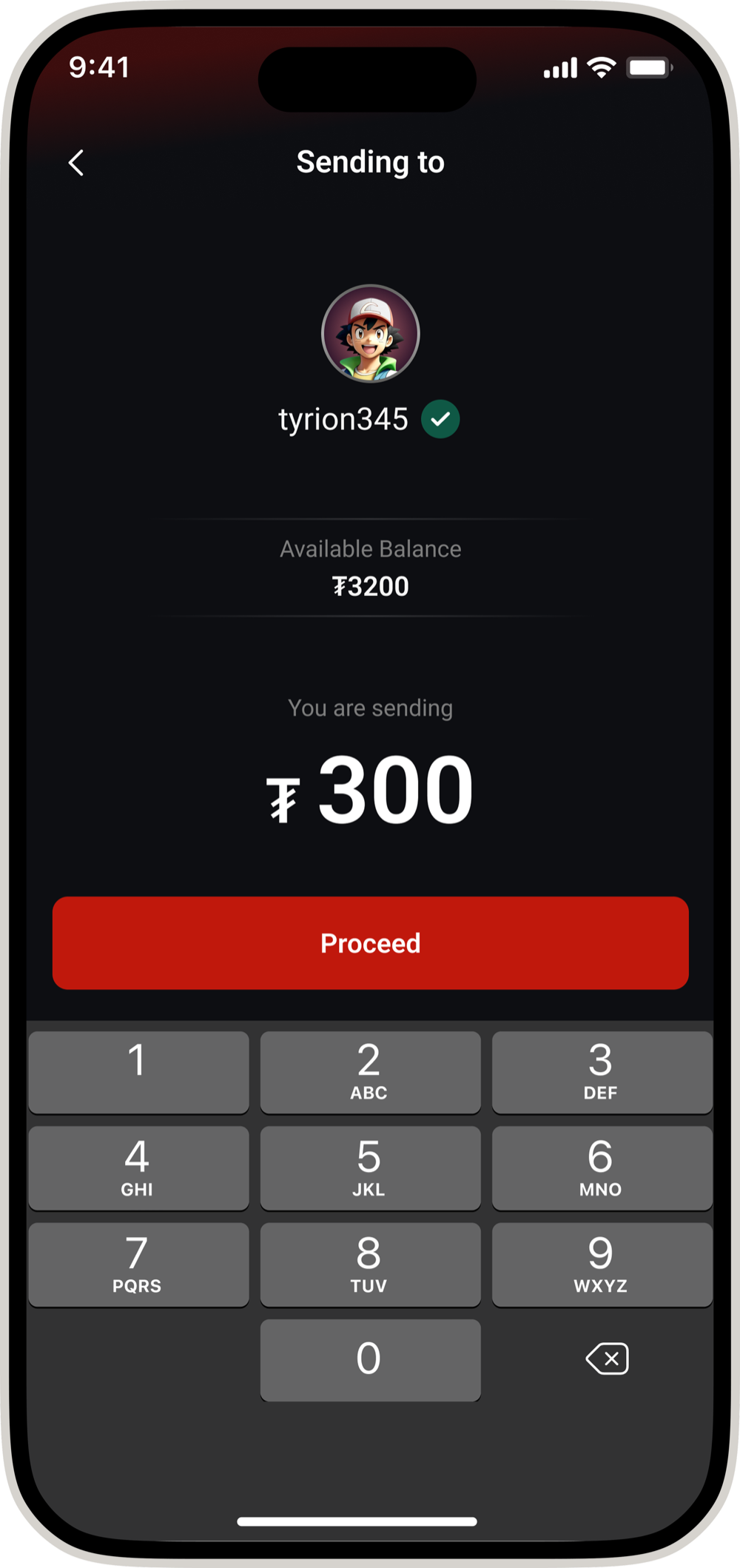
The recipient's avatar, full username and verified mark stay in view while entering the amount.
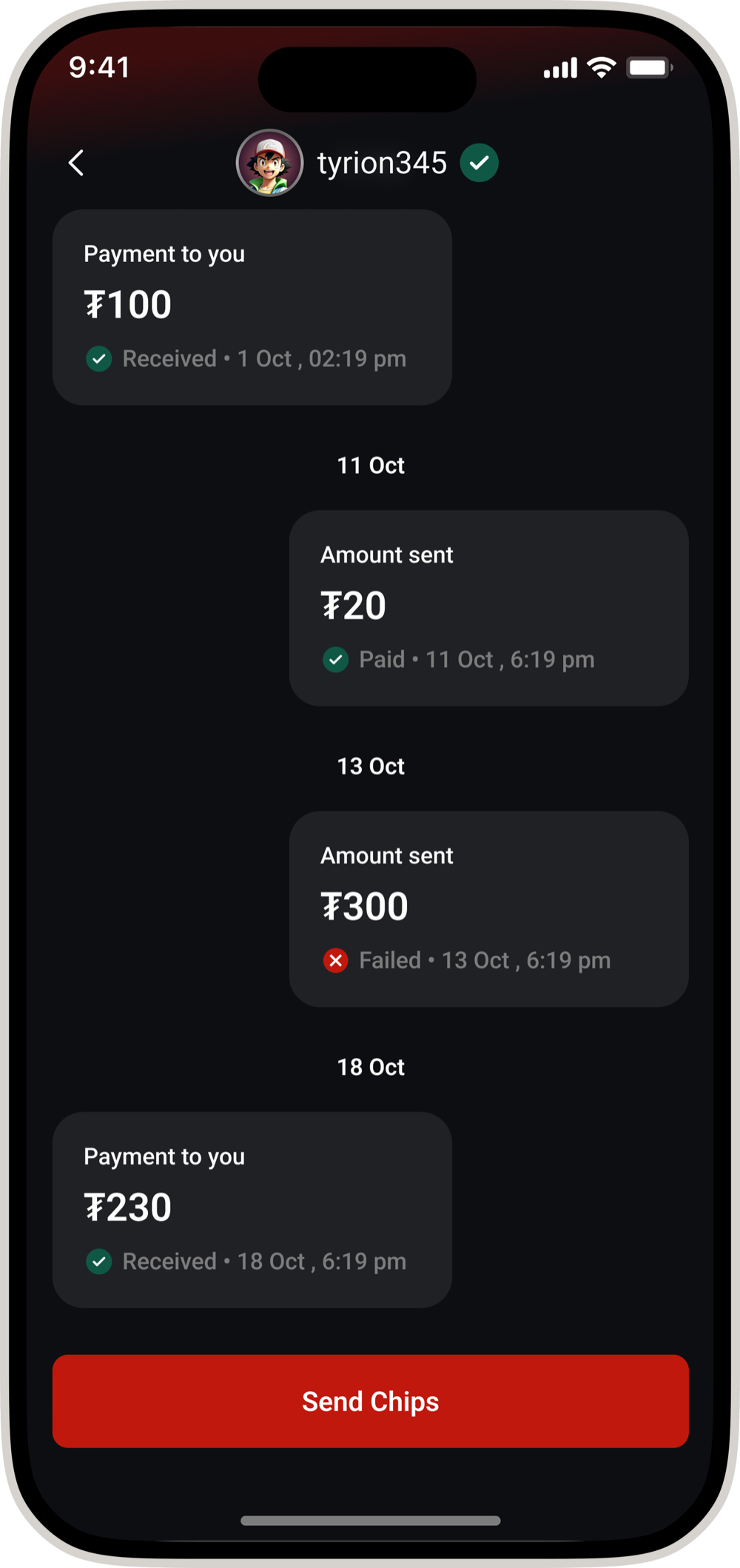
Previous transfers with this player, each with its status.
Progressive Confirmation Model
- Problem
Requiring OTP verification for every transfer improved security but added unnecessary friction for frequent transfers.
- Solution
For first-time transfers, users verify the transaction using OTP to confirm intent and establish trust.
For subsequent transfers to the same recipient, OTP is replaced with a confirmation modal where users review recipient details and transfer amount before proceeding.
- Outcome
Balanced security and usability by providing stronger verification for new recipients while enabling faster repeat transfers with minimal friction.
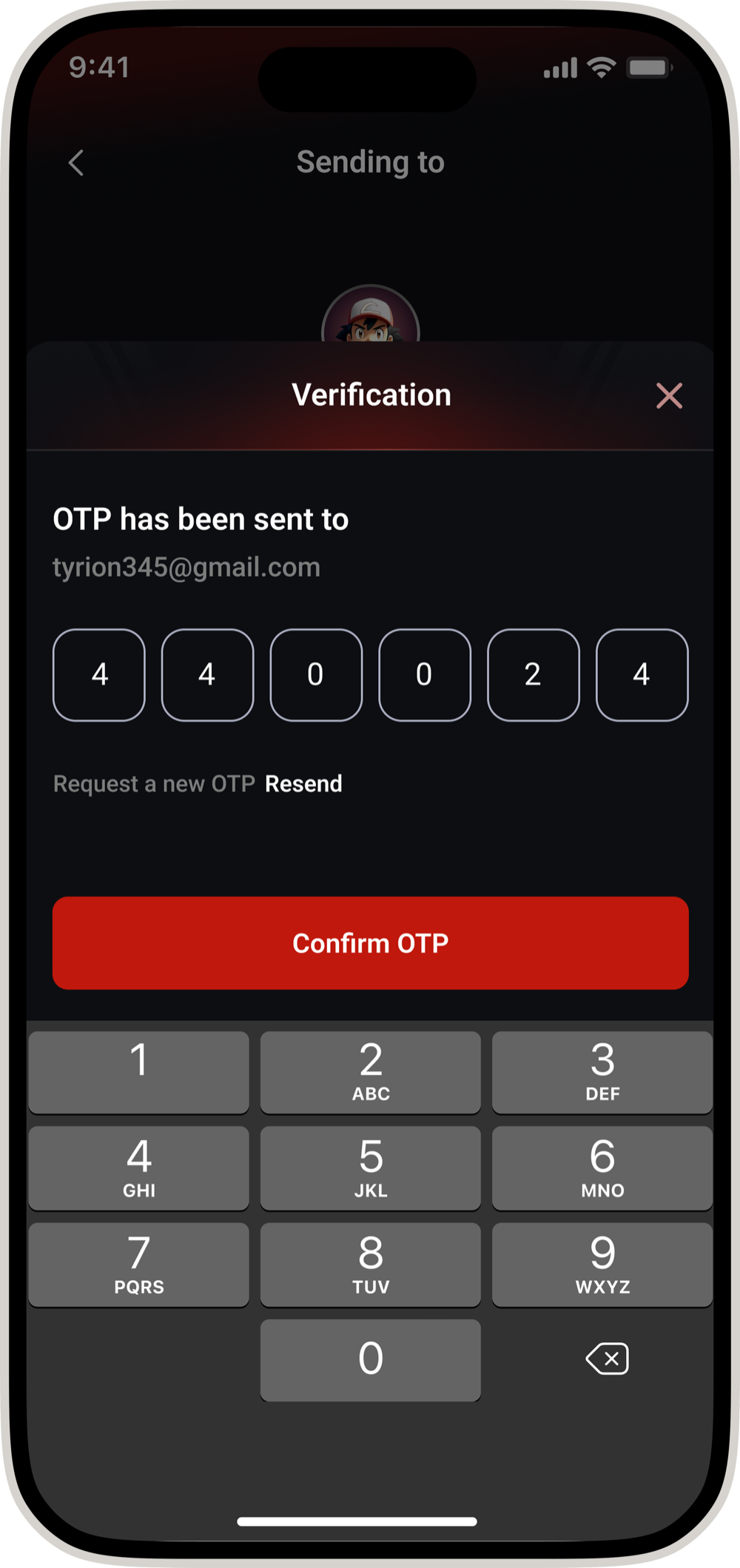
An OTP sent to the player’s email confirms intent.
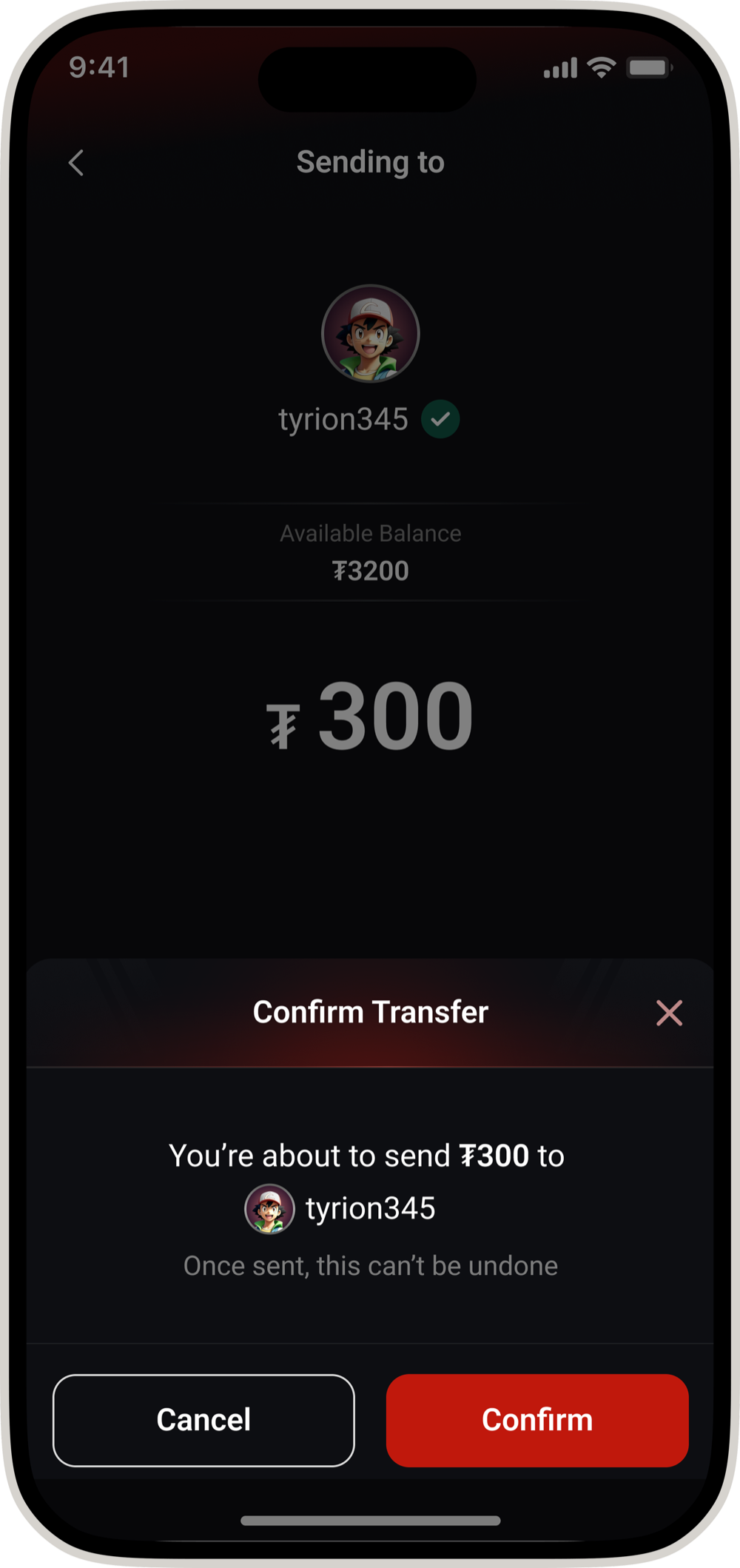
A confirmation modal shows the recipient and amount before sending.
Designing for Transparency
- Problem
Users wanted confidence after the transaction was completed.
- Solution
I designed a transaction tracking system featuring detailed transfer histories, unique IDs, secure receipts, and precise timestamps. This ensures real-time status visibility, allowing users to effortlessly monitor and verify their financial activity.
- Outcome
Created stronger post-transfer trust.
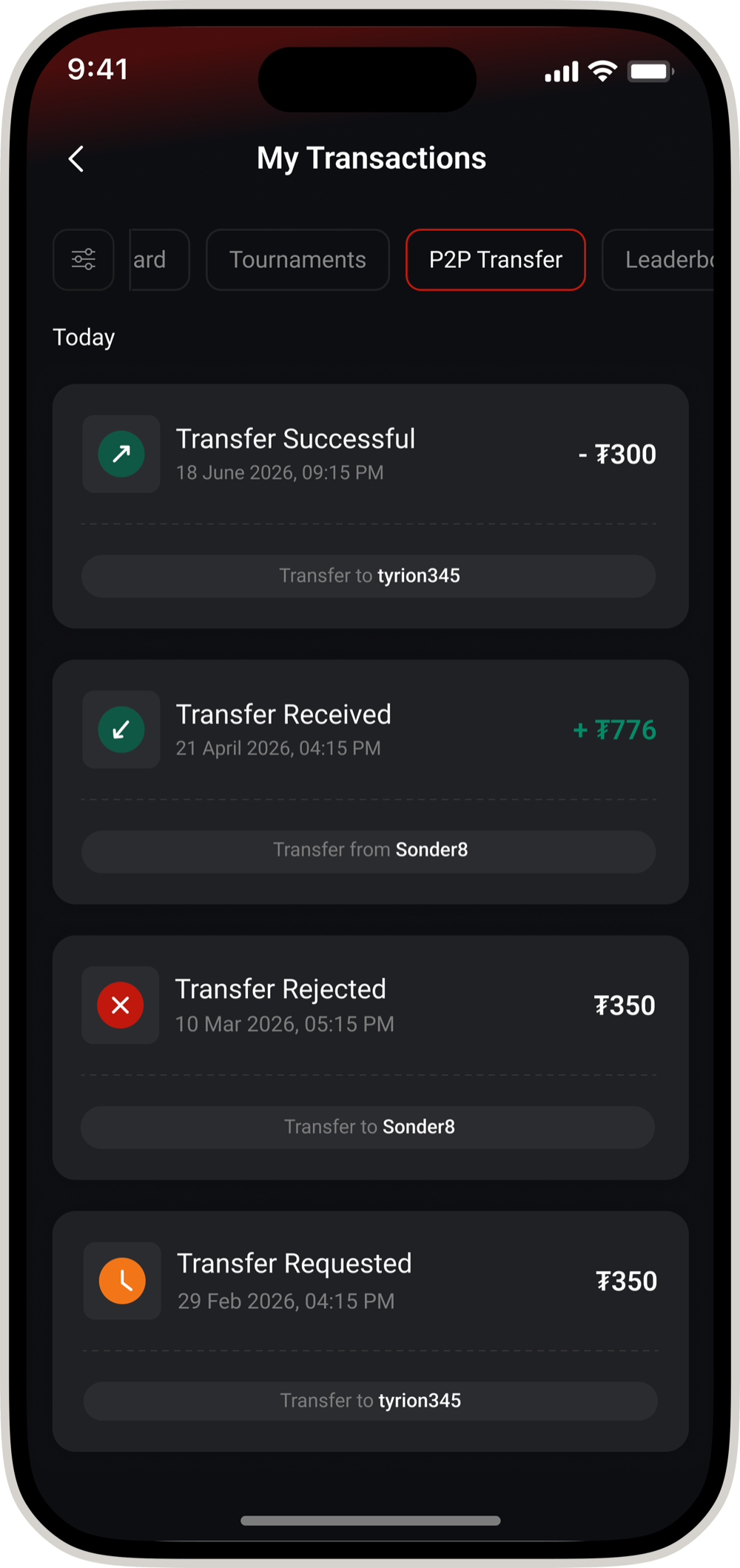
Every transfer is listed with its status and amount.
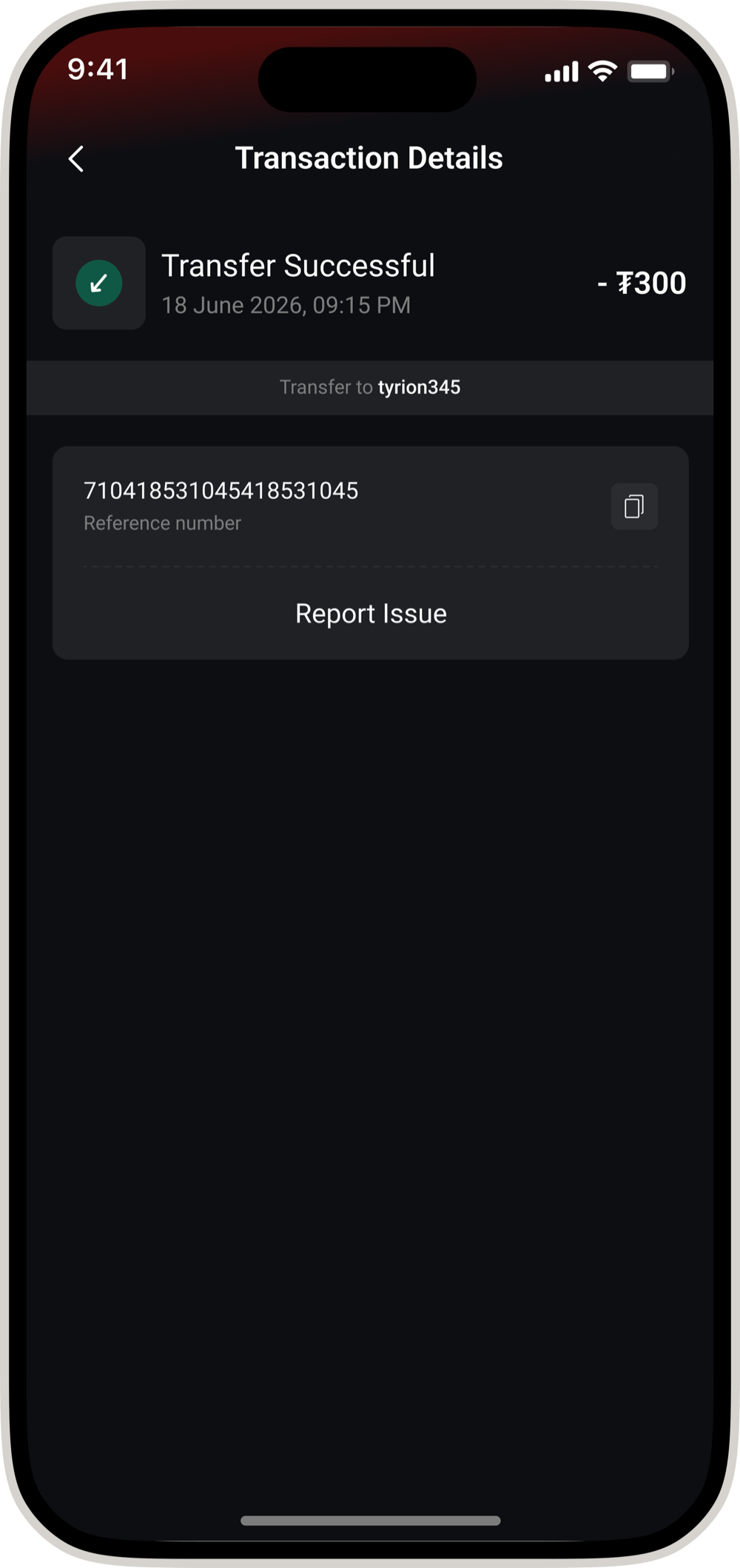
Each transfer has its own details, ID and a way to report an issue.
Reducing Friction for Repeat Behavior
- Problem
Many transfers occurred between the same players repeatedly
- Solution
Surfaced recent recipients, previous transfer connections, and repeat transfer shortcuts to help users transfer money faster with less effort.
- Outcome
Improved efficiency without compromising confidence.
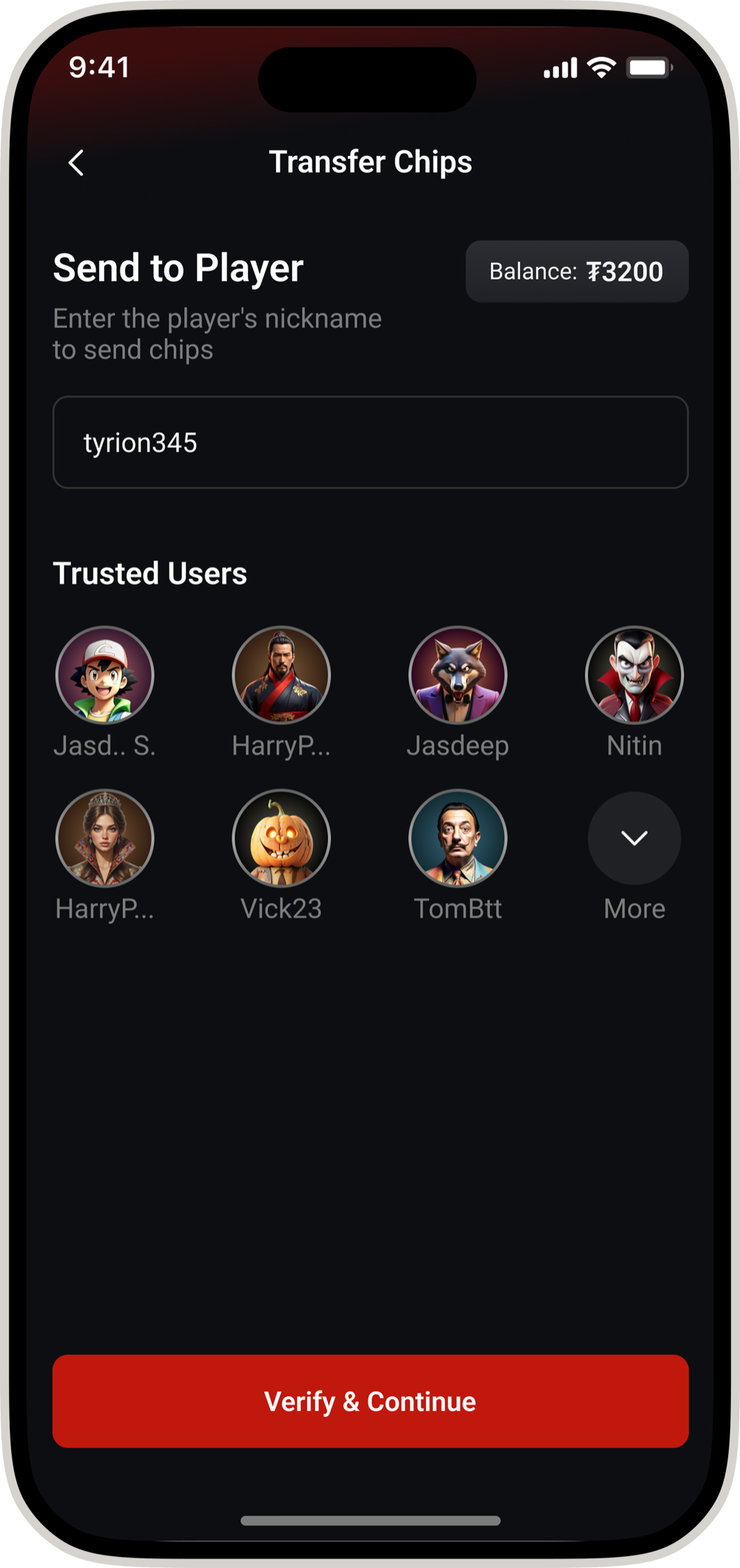
Preventing Costly Errors
- Problem
Amount-entry mistakes become expensive when real value is involved.
- Solution
Introduced formatted amount inputs, available balance visibility, remaining balance previews, and clear insufficient balance states to help users enter amounts confidently and avoid transfer errors.
- Outcome
Reduced avoidable mistakes.
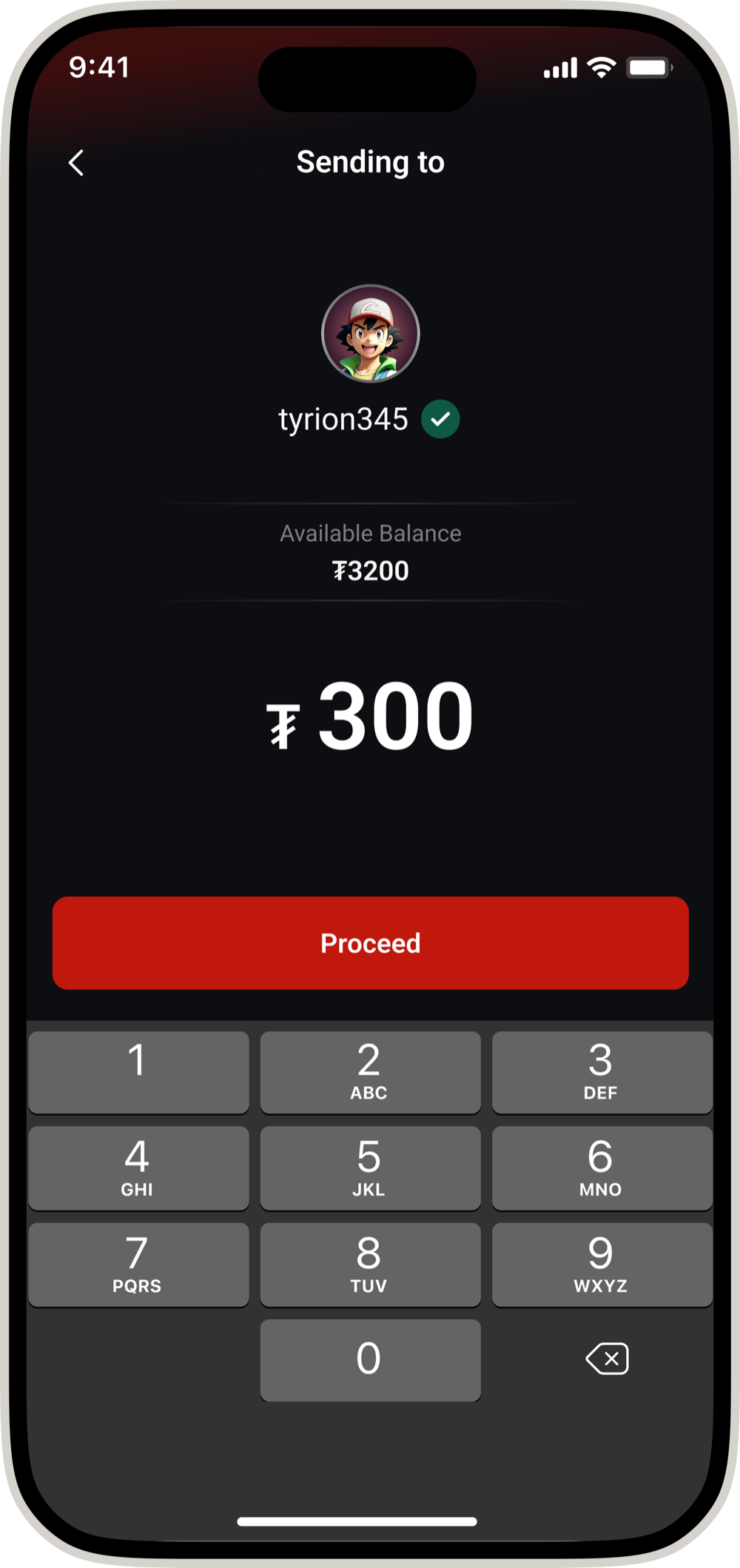
Available balance sits directly above the amount being entered.
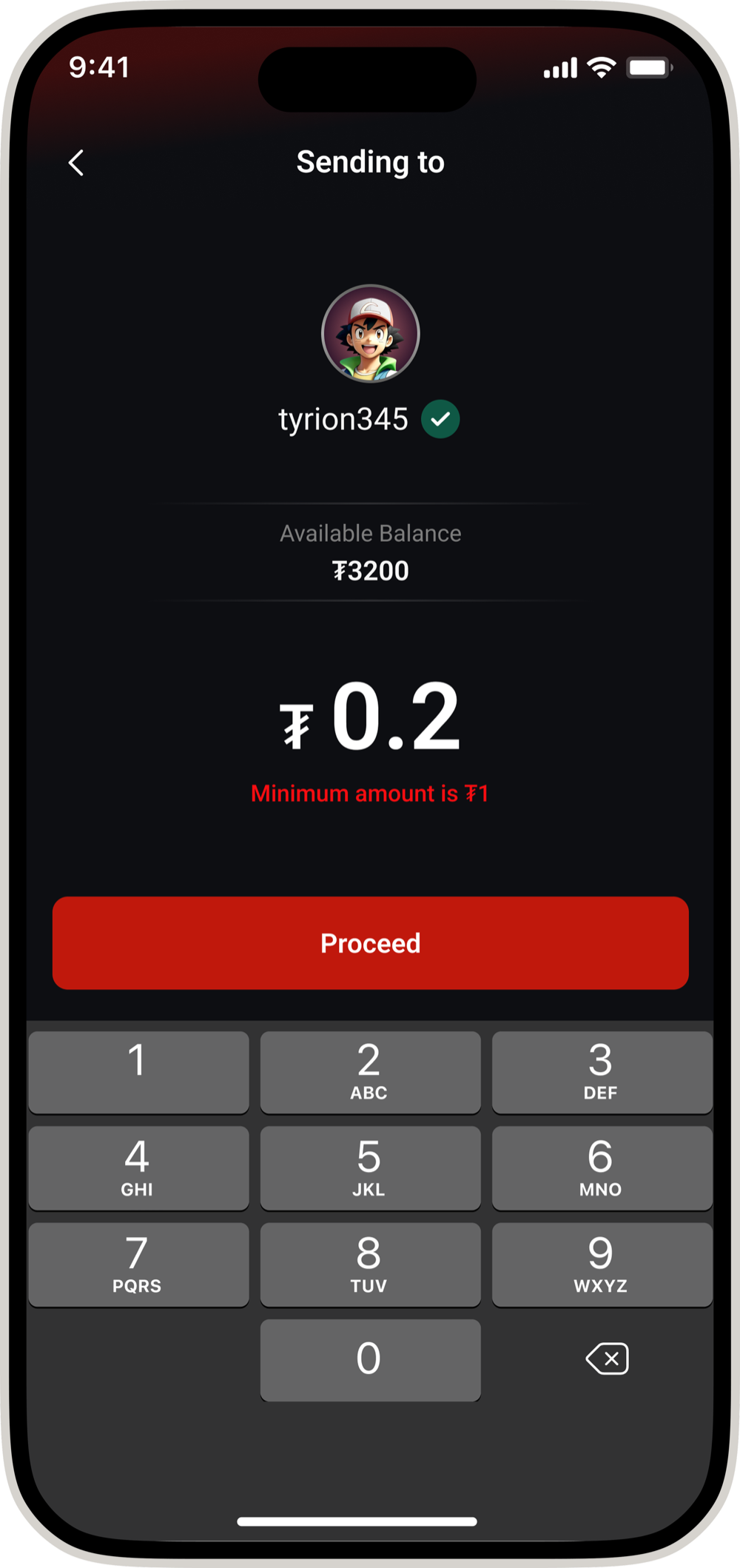
An inline message flags an amount below the minimum.
Trade-offs & Constraints
Fast for familiar recipients, careful with new ones.
Balancing Speed and Confidence
Users expected instant transfers, but moving chips is a high-trust action. The experience had to balance speed with clarity and confidence.
| Design decision | FasterReduces time & friction | More confidentReduces risk & uncertainty |
|---|---|---|
| One-step transfer | ✓ | — |
| Recipient verification | — | ✓ |
| Transfer review screen | — | ✓ |
| Recent recipients | ✓ | ✓ |
| Transaction receipts | — | ✓ |
The final experience strikes a balance between:
- Efficiency
- users can transfer money quickly to familiar recipients.
- Accuracy
- users can verify recipient details before sending.
- Trust
- users receive confirmation and proof of completed transactions.
The Final Experience
We explored different visual directions before settling on a clean, trust-focused design that prioritised clarity, recipient visibility, and transaction transparency.
First-Time Transfer
Trusted User Transfer
Transaction Details
Transaction History
Impact
- Player A
- External Wallet
- Crypto Transfer
- Deposit
- Play
- Player A
- P2P Transfer
- Play
Adoption
The simpler flow helped players move value within the ecosystem, reducing the need to leave the platform.
- 6%
- Adoption rateAmong players using P2P transfers.
- 15%
- Repeat usageShowing continued use of the feature.
Key Takeaway
I didn't design a way to send money. I designed infrastructure that allowed value to move naturally between members of a poker community.